















The Origins
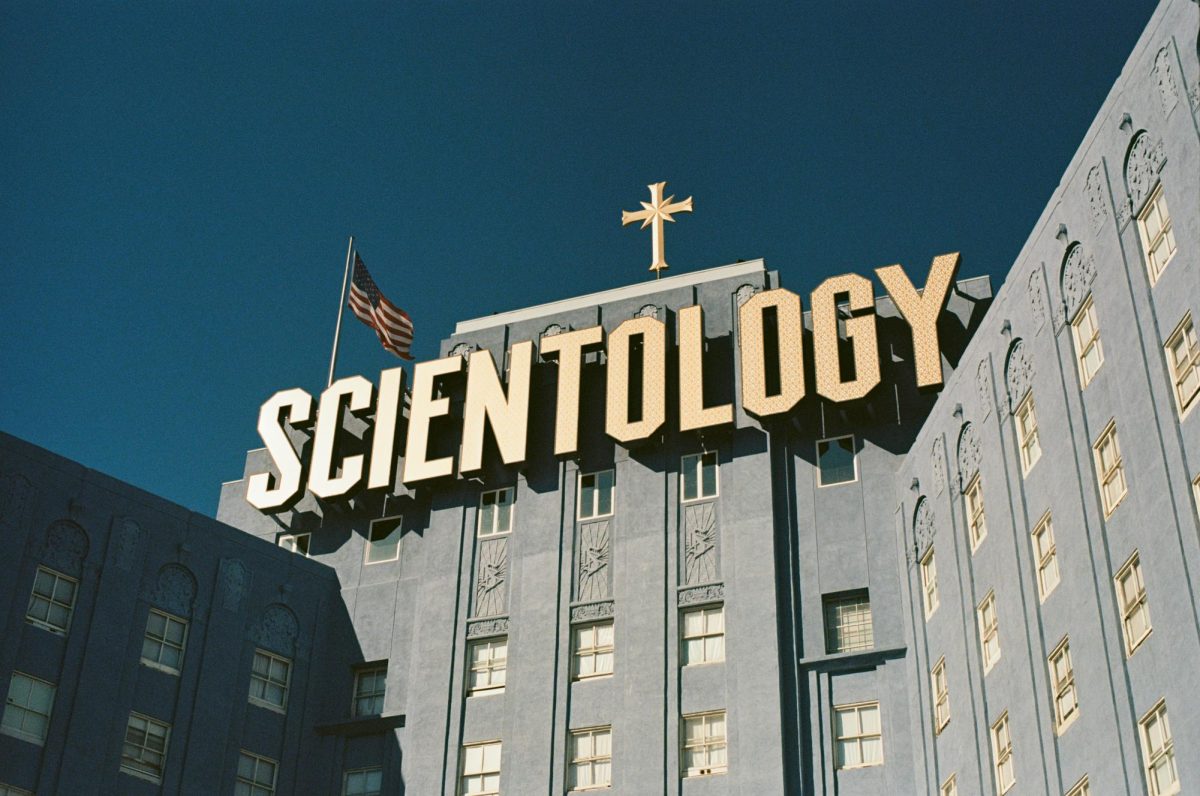
Scientology began, as many stories do, with a book. In 1950, Lafayette Ronald Hubbard, a prolific science fiction author who had churned out pulp tales of space adventurers and alien civilizations, published Dianetics: The Modern Science of Mental Health. The volume promised something new, a systematic method for cleansing the mind of trauma, making a healthier, freer human being. The concept, unverified by mainstream medicine, caught fire. Within two years, Hubbard’s ideas had attracted enough followers to necessitate an organizational structure.
In 1952, Hubbard founded the Hubbard Association of Scientology in Phoenix, Arizona, and by 1953, the enterprise had been formally restructured as the Church of Scientology. The theological upgrade was deliberate, and financially savvy. As The Collector’s has reported, “tax-exempt status was denied to the church in 1958 on the grounds that Hubbard was making a substantial personal profit from Scientology, a controversy that foreshadowed decades of financial and legal battles to come. Still, the movement grew: by the late 1950s, Scientology counted more than 100 organizations in the United States alone.”
At the center of the theology was a concept both cosmic and deeply personal. Scientology believe in thetans, and thetans are spiritual beings that live in human bodies, said to have experienced all past lives. The goal of Scientology’s ideas and practices is to free people from the bad influences of these past traumas through a series of “auditing’’ sessions. Achieve enough progress, Hubbard promised, and you could reach the state of “Clear”, a condition of spiritual enlightenment and personal fulfillment. But the path to Clear was neither short nor free. In somme cases, auditing sessions have costed up to $1,000 an hour, depending on the auditor’s level in Scientology, which is absolutety absurd, per The Collector.
Operation Snow White
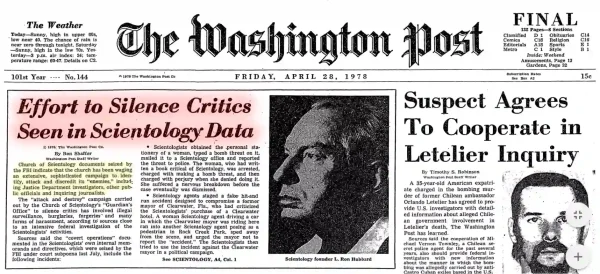
As Scientology grew, so did its institutional paranoia about outside threats. In 1966, the organization established the Guardian’s Office, a department whose stated purpose was countering hostility toward Scientology. What it actually did was far more aggressive. The GO organized a spy campaign to counter negative publicity, gaining intelligence, and entering organizations. In “Operation Snow White,” The Guardian’s Office (GO) entered the IRS and several government agencies, taking tens of thousands of documents related to Scientology, politicians, and public figures. The plot untangled spectacularly. Following FBI raids on Church of Scientology offices in Washington, D.C., and Los Angeles in July 1977, authorities exposed a major infiltration of government agencies by the group’s Guardian Office. Eleven members were subsequently indicted, and in December 1979, they received prison sentences of four to five years and $10,000 fines. Those convicted included Mary Sue Hubbard, wife of founder L. Ron Hubbard, per Wikipedia
The church recovered, and, in a stunning reversal, ultimately won a key battle with the government it had once burglarized. Following a 1993 settlement, the U.S. government recognized Scientology entities as tax-exempt, ending a 40-year tax issue.. The recognition legitimized Scientology in the eyes of American law, even as scrutiny of its practices continued to intensify worldwide. Germany took the opposite view, classifying the organization as an “anticonstitutional sect” and a threat to democracy. According to a 2022 YouGov poll, Scientology was ranked as the least-favored religious group in the U.S., with approximately 50% of Americans viewing it negatively, per WIkipedia.
David Miscavige and the Era of Celebrity Power
When L. Ron Hubbard died in January 1986, he left behind an organization worth hundreds of millions of dollars and a dangerous power vacuum. Into that vacuum stepped David Miscavige, a man who had joined Scientology’s elite Sea Organization as a teenager and risen to become Hubbard’s deputy. By 1987, he had consolidated his grip on the organization, taking the title of Chairman of the Board of the Religious Technology Center, the body that controls all Scientology trademarks and copyrights. (Wikipedia David Miscavige)
Under Miscavige, Scientology doubled down on its strategy of celebrity recruitment. Tom Cruise, John Travolta, Kirstie Alley, and dozens of other Hollywood figures became public faces of the faith, lending it glamour and cultural reach that no amount of advertising could buy. Opening courses focus on communication skills and self-confidence, looking at people seeking personal growth, per Medium. Celebrity involvement made the organization seem successful and desirable, and the community provided a strong sense of belonging and mission.
But the Miscavige era brought with it a shadow. Dozens of former senior executives described a culture of physical violence, isolation, and psychological coercion at the Church’s International Base in Hemet, California, a facility that became known inside Scientology simply as “The Hole.” Several lawsuits have been filed in the United States accusing the reclusive leader of harassment, human trafficking, and harsh punishments. (Scientology Buisness) In 2019, a woman who grew up in the Church of Scientology and joined its Sea Org staff at 15 filed a lawsuit accusing the organization of child abuse and trafficking. She ultimately escaped the Church’s Gold Base in California by hiding in the trunk of a car driven by a non-Scientologist actor. (NBC News)
Fair Game Policy
One of the most chilling aspects of Scientology’s history is a formal policy toward its critics, codified by Hubbard himself: the doctrine of “Fair Game.” Widely accused of retaliating against opponents, Scientology executives have made it clear that the organization operates on a principle of uncompromising offensive action against critics. “not a turn-the-other-cheek religion,” per Wikipedia. “Journalists, politicians, former Scientologists, and various anti-cult groups have made accusations of wrongdoing against Scientology since the 1960s, and almost without exception, these critics have been targeted for retaliation in the form of lawsuits and public counter-accusations of personal wrongdoing,” per Religion Fandom.
Related to the “Fair Game” policy, dead agenting is a Hubbard created idea that points followers to destroy the credibility of critics by making counter-accusations against them. L. Ron Hubbard “proclaimed that all critics of Scientology are criminals”, and wrote that “Whenever a critic’s background was scrutinized, evidence of criminal activity warranting incarceration was discovered.”
One of the highest-profile examples in recent years is actress Leah Remini, who left the Church in 2013 and produced the Emmy-winning documentary series Leah Remini: Scientology and the Aftermath. In August 2023, she filed a lawsuit against the Church and Miscavige alleging years of harassment, surveillance, defamation, and intimidation. In a March 2024 ruling, parts of Remini’s harassment claims, including allegations of surveillance, were allowed to proceed, even as the Church won dismissal of other portions on First Amendment grounds.
Lawsuits, Trafficking Claims, and a Fugitive Leader
By the mid-2020s, the legal walls around Scientology and its leadership had grown denser and more serious than at any point in the Church’s history. In April 2022, three former Scientology workers filed a federal complaint under the Trafficking Victims Protection Reauthorization Act, alleging they were raised and exploited inside the organization, forced into work from childhood, and subjected to peonage and other trafficking offenses, naming David Miscavige and multiple Scientology corporate entities as defendants.
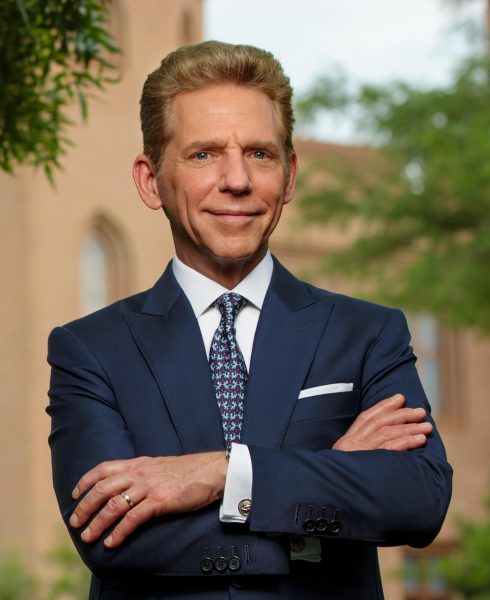
Serving Miscavige, however, proved extraordinarily difficult. The plaintiff’s lawyer told the court: “He has a history of evading service and process.”, per Courthouse News. As of 2026, Miscavige has not made a verifiable public appearance in years, even as recently as now, per Courthouse News.
Meanwhile, actor and Scientologist Danny Masterson was convicted of two counts of rape in May 2023 and sentenced to 30 years to life in prison in September 2023, per LA Times. Two of his former attorneys were sanctioned in June 2023 for leaking confidential discovery material about his victims to the Church of Scientology. Former members allege the Church had long been aware of accusations against Masterson and worked to suppress them, precisely the kind of institutional cover-up that plaintiffs have attempted to frame as a RICO conspiracy in ongoing federal litigation.
The World vs. Scientology
The question of what Scientology actually is, religion, business, cult, therapy movement, remains genuinely contested across international borders. “The legal status of Scientology differs between jurisdictions, with some countries granting it religious status while others treat it as a non-religious belief system, a commercial enterprise, or a suspicious activity subject to government monitoring,” per Wikipedia. In the United Kingdom, tensions escalated sharply in 2025 and into 2026. Mid-Sussex District Council issued Scientology with a Planning Contravention Notice in 2024 after the Church failed to apply for planning permission for the massive structures erected to host its annual gathering at its UK headquarters, proceeding to build the giant temporary structures regardless, causing severe damage to land in a protected Area of Outstanding Natural Beauty. The Church’s premises licence subsequently faced review amid allegations of failing to protect children from harm. Scientology Business
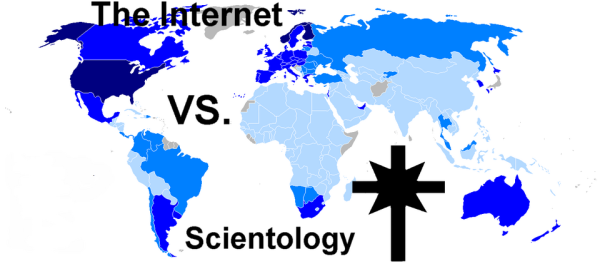
On membership, independent experts have long questioned the Church’s claimed figures of millions of followers. Higher up memebers are kept hidden from the public, with people thinking the numbers have dropped dramatically, with social media and streaming documentaries having made controversial practices harder to hide. (Medium) With the combined impact of Lawrence Wright’s Going Clear and the subsequent HBO film, Scientology’s darkest secrets were exposed to the public, unleashing an ongoing wave of public scrutiny.
The Questions That Remain
Whatever one concludes about the sincerity of Scientology as a spiritual path, its impact on law, culture, and the definition of religious freedom in democratic societies is undeniable. Scientology’s story brings up questions, Where is the legal and ethical boundary between religious practice and business activities?
For the dozens of former members currently pursuing litigation, people who say they were trafficked, abused, surveilled, or sexually assaulted, and who allege the Church’s institutional machinery worked to silence them, these are not abstract questions. And as long as David Miscavige remains beyond the reach of process servers, and as long as the Church continues to deploy its considerable legal and financial resources to fight every claim, the answers will remain elusive.
Scientology began as one man’s book. Seventy-five years on, it has become something far stranger, far more contested, and far more consequential than L. Ron Hubbard’s readers in 1950 could possibly have imagined.